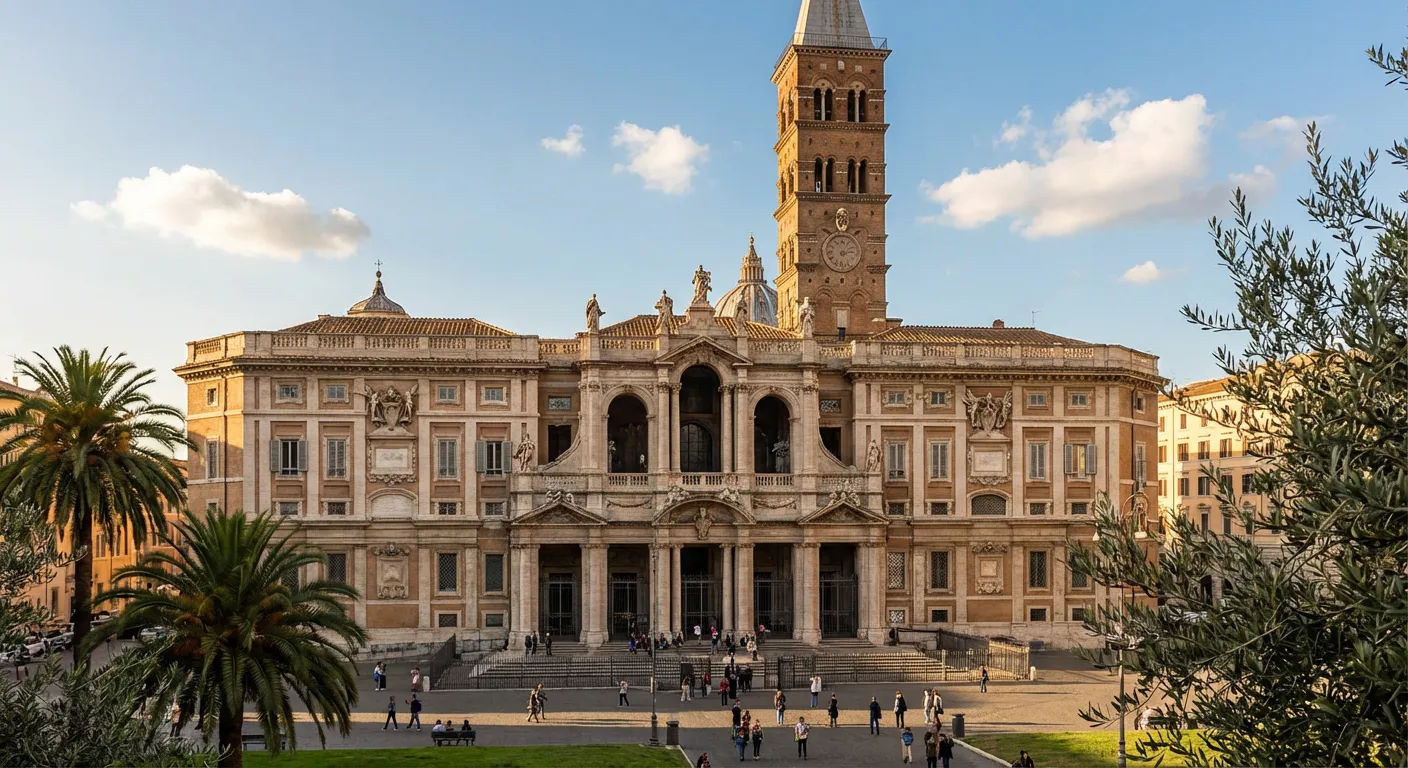
Santa Maria Maggiore
In the year 360 AD, a profound spiritual event unfolded in Rome, Italy, leading to the founding of one of Catholicism's most revered sites. According to enduring tradition, the Blessed Virgin Mary appeared in a shared dream to Pope Liberius and a wealthy, childless Roman patrician. During this nocturnal vision, the Virgin Mary delivered a clear message: she requested that a magnificent church be built in her honor, promising that a miraculous sign would appear the following morning to indicate the exact location where the sanctuary should be constructed.
The promised sign manifested in a breathtaking and impossible miracle. On the morning of August 5th, during the sweltering heat of the Roman summer, residents awoke to find a miraculous snowfall blanketing the summit of the Esquiline Hill. The unseasonal snow did not fall randomly; rather, it fell in a precise geometric pattern, perfectly outlining the floor plan of the requested church. Awestruck by this divine intervention, Pope Liberius traveled to the site and personally traced the perimeter of the new basilica into the miraculous summer snow, marking the foundation of the sacred space.
This extraordinary event led to the construction of Santa Maria Maggiore, which stands today as a magnificent Papal Basilica and the largest church in Rome dedicated to the Blessed Virgin Mary. The miracle of "Our Lady of the Snows" left an indelible mark on the faithful, establishing the basilica as a major center of Marian devotion. The legacy of the apparition is kept vividly alive to this day; every year on the feast day, a shower of white rose petals is released from the basilica's coffered ceiling, allowing believers to commemorate the miraculous summer snow that forever changed the spiritual landscape of Rome.
3000000