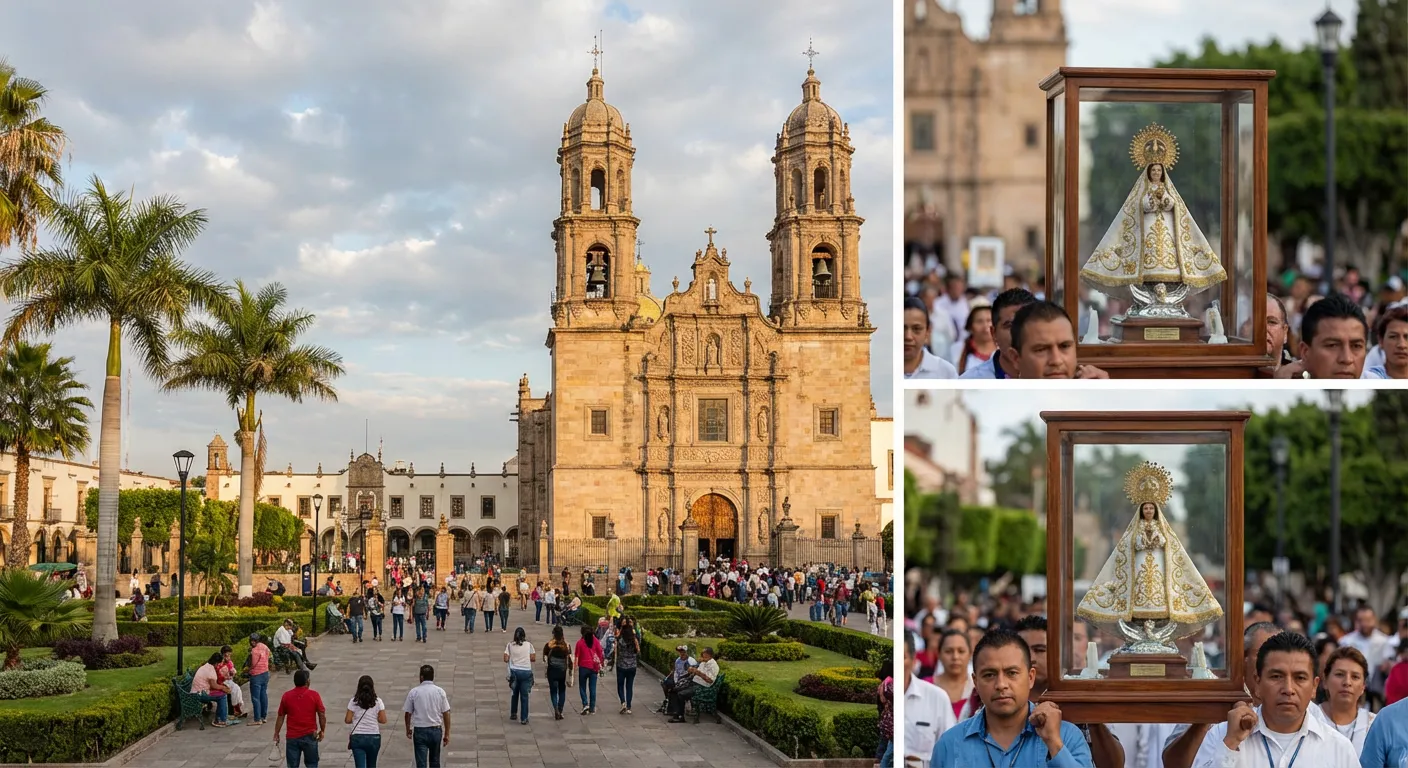
Our Lady of Zapopan
The devotion to Our Lady of Zapopan, originating in Zapopan, Mexico, in 1541, centers around a profound miraculous event rather than a traditional spoken apparition. During the violent Mixtón War, a fierce conflict between Spanish colonizers and indigenous peoples, Franciscan missionary Fray Antonio de Segovia sought to bring peace to the region. Armed with nothing but a small, humble statue of the Virgin Mary crafted from cornstalk paste by indigenous artisans, Fray Antonio bravely stepped onto the battlefield. According to historical accounts, as he pleaded for peace, brilliant rays of heavenly light suddenly began to emanate from the small image of the Virgin.
This awe-inspiring celestial sign deeply moved the indigenous warriors. Overwhelmed by the radiant light and the profound sense of peace that accompanied it, the fighters laid down their weapons, effectively ending the bloody conflict without further loss of life. Though the Virgin Mary did not deliver a spoken message, her miraculous intervention spoke volumes, bridging a bitter cultural divide and leading thousands to voluntarily embrace the Christian faith. Recognizing the profound spiritual shift, Fray Antonio gifted the miraculous statue to the local indigenous community, where she quickly became a unifying mother figure.
The lasting impact of Our Lady of Zapopan—affectionately known as "La Generala" and the patroness of the state of Jalisco—remains incredibly strong today. Her sanctuary has been elevated to the status of a Minor Basilica, serving as a major spiritual epicenter for the faithful in Mexico. Each year in October, millions of devotees participate in the Romería, a massive and vibrant pilgrimage where the revered statue is carried from the Guadalajara Cathedral back to her Basilica in Zapopan. This enduring devotion stands as a beautiful testament to the miraculous peace and unity she brought to a war-torn land centuries ago.
2000000