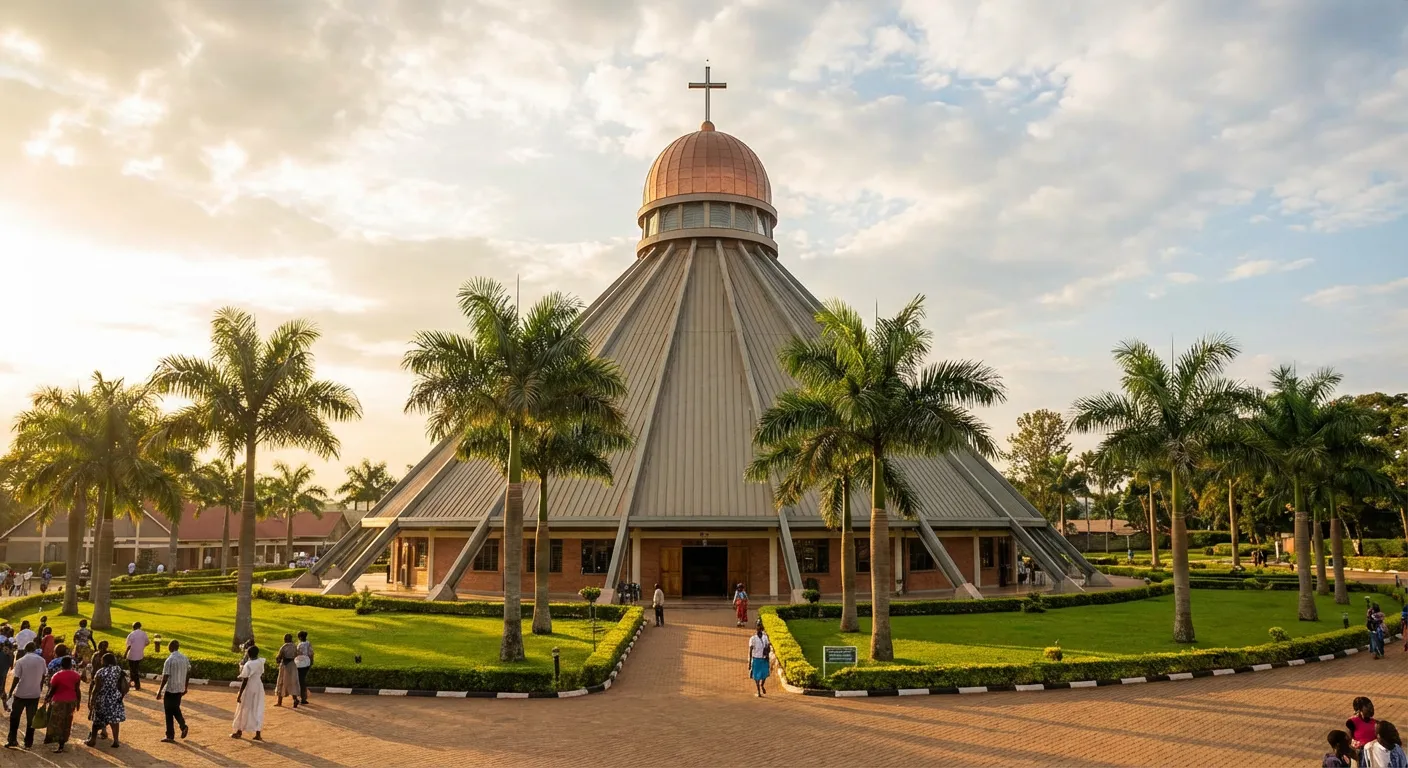
Our Lady of the Rosary of Namugongo
While the shrine at Namugongo in Kampala, Uganda, is a site of profound spiritual significance, it is important to clarify historically that it is not a recognized Marian apparition site. Rather than experiencing a direct vision or receiving spoken messages from the Virgin Mary, the key figures—the Uganda Martyrs—were young Christian converts who demonstrated extraordinary faith. In 1886, under the orders of King Mwanga II, these young men were executed for refusing to renounce their Christian beliefs. Their devotion, however, was deeply tied to the Blessed Virgin Mary, and they are closely associated with Our Lady of the Rosary, to whom they prayed fervently during their imprisonment and persecution.
Instead of a traditional apparition with supernatural signs or spoken messages from Mary, the true "miracle" of Namugongo was the unwavering courage of the martyrs. As they faced brutal execution by fire, historical accounts note that many of the martyrs recited the Rosary, prayed together, and sang hymns. They drew immense spiritual strength from their faith and their devotion to the Blessed Mother. The profound grace and peace they exhibited in their final moments served as a powerful testament to their beliefs, inspiring awe and planting the seeds of deep faith in the region.
The lasting impact of the Uganda Martyrs has been monumental for Christianity in Africa. Today, the site where they gave their lives is home to the Namugongo Martyrs' Shrine, a globally recognized pilgrimage destination. Millions of the faithful gather there annually, particularly on Martyrs' Day (June 3rd), to honor their sacrifice and seek the intercession of Our Lady. The blood of these martyrs transformed a site of tragic execution into a lasting beacon of faith, resilience, and devotion, proving that their ultimate sacrifice was the catalyst for the explosive growth of the Church in Uganda.
500000