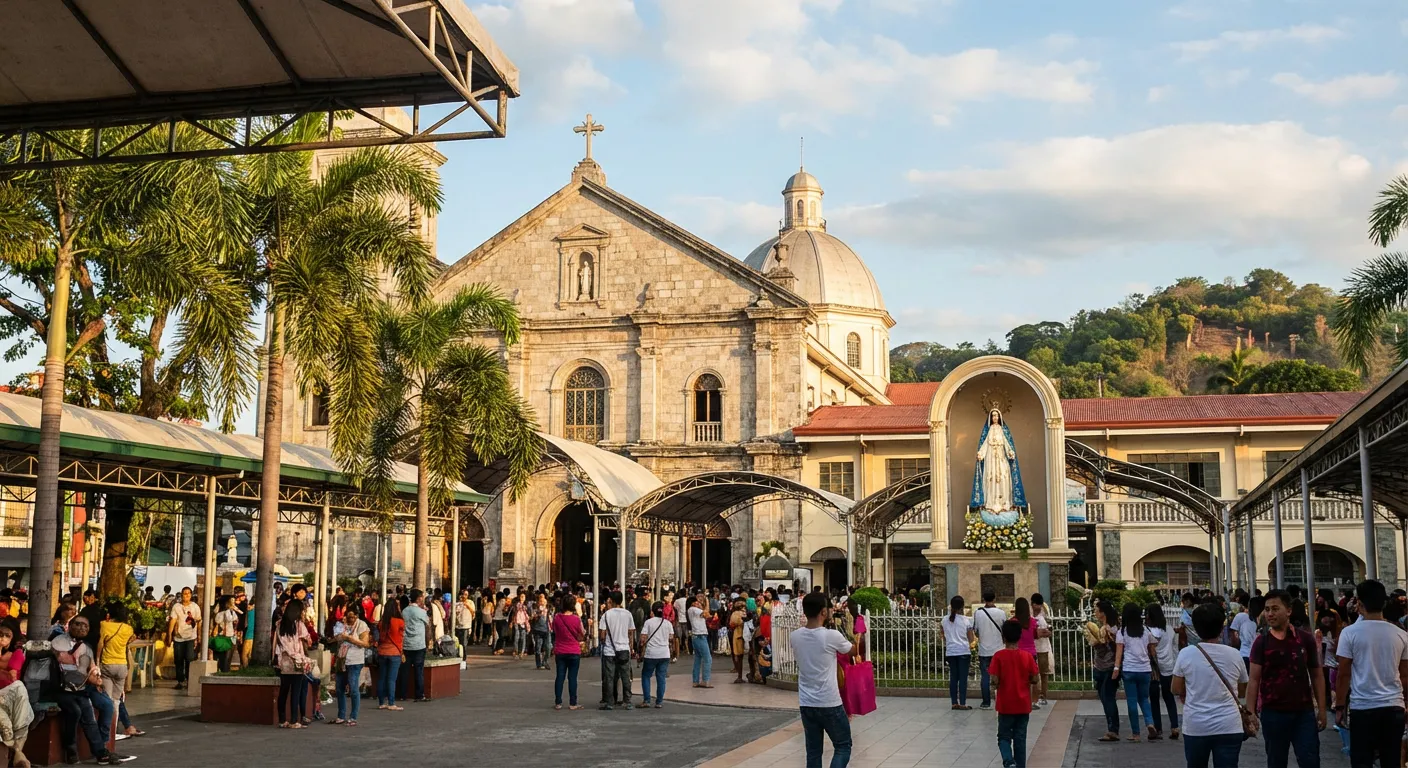
Our Lady of the Rosary of Manaoag
In the 1610s, the rural landscape of what is now Manaoag, Philippines, became the site of a profound spiritual encounter. According to local tradition, a middle-aged farmer was walking home when he heard a mysterious, radiant female voice calling out to him. Looking up, he witnessed a breathtaking vision: the Virgin Mary standing on a luminous cloud that rested upon the branches of a tree. She was holding the Child Jesus in her left arm and a rosary in her right. It is from this divine call that the town derived its name, as "Manaoag" originates from the local Pangasinense word mantaoag, meaning "to call."
During this heavenly encounter, the Blessed Virgin imparted a clear and loving message to the visionary, expressing her desire for a sanctuary. She requested that a church be built in her honor on that very spot, promising that her children would receive many favors and graces there. The local community quickly responded to her request, and the site soon became a wellspring of reported miracles. Over the centuries, Our Lady of the Rosary of Manaoag has been credited with countless divine interventions, including saving the town from a devastating locust plague, protecting the church from destruction during World War II bombings, and granting miraculous healings to the sick.
Today, the lasting impact of this 17th-century apparition is deeply woven into the spiritual fabric of the Philippines. The humble chapel requested by the Virgin Mary has grown into a magnificent Minor Basilica, serving as one of the country's most venerated pilgrimage sites. Millions of faithful devotees from the local community and around the world travel to the Minor Basilica of Our Lady of the Rosary of Manaoag each year, drawn by the enduring promise of her maternal protection and the profound peace that permeates the sacred grounds.
5000000