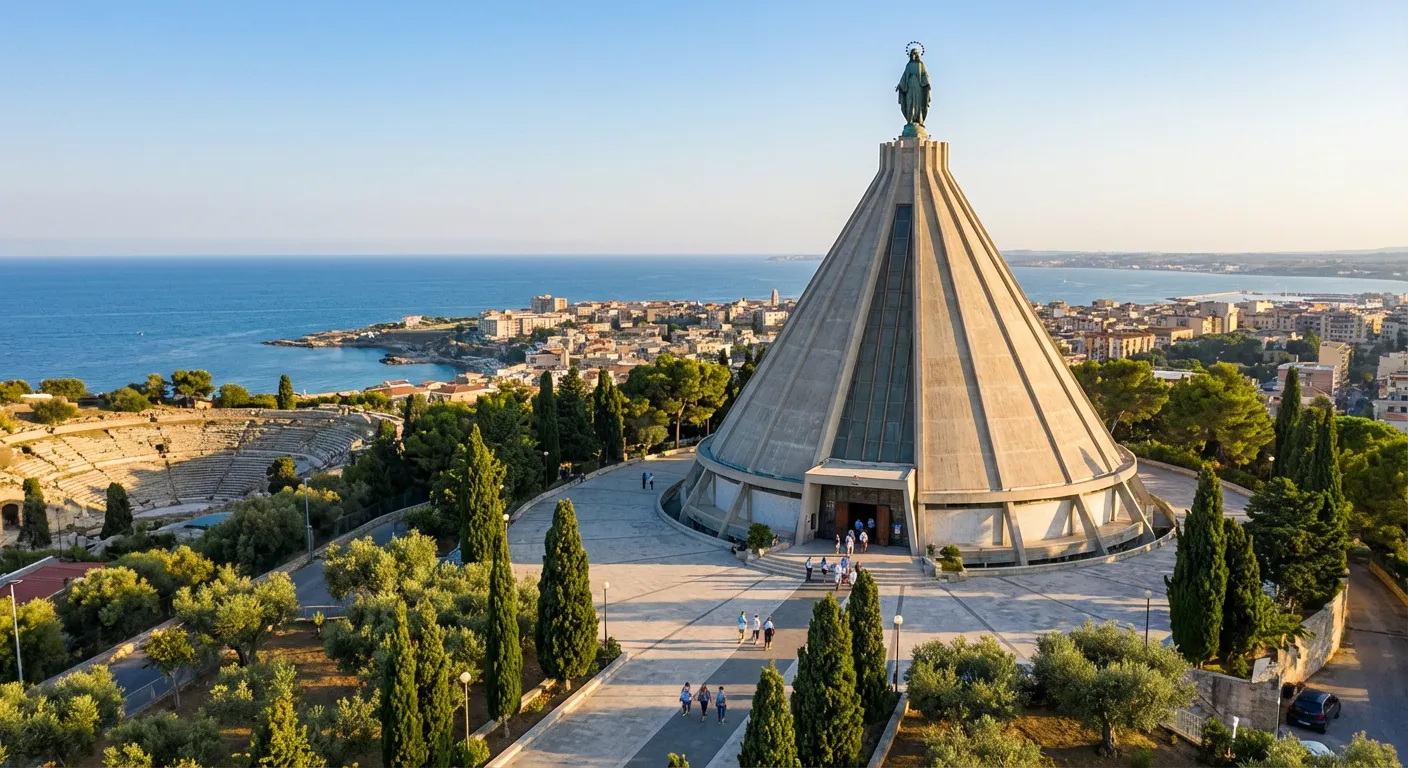
Our Lady of Tears (Syracuse)
In 1953, the city of Syracuse, Italy, became the site of a profound and unique Marian event that centered not on a spoken apparition, but on a miraculous sign of sorrow. The events began in the humble home of a newlywed couple, Antonina and Angelo Iannuso. Antonina, who was pregnant, had been suffering from severe toxemia, which caused intense pain, seizures, and temporary bouts of blindness. On the morning of August 29, 1953, Antonina awoke to find her sight completely restored. As she looked at a mass-produced plaster plaque of the Immaculate Heart of Mary hanging above their bed—a recent wedding gift—she was astonished to see the image weeping real tears.
Unlike traditional apparitions where the Virgin Mary imparts verbal messages, Our Lady of Tears communicated through a profound, silent action. The weeping continued intermittently for four days, drawing massive crowds to the Iannuso home. What sets the Syracuse miracle apart is the rigorous scientific investigation it underwent while the event was still occurring. A medical commission, authorized by the Church and local authorities, collected the fluid directly from the plaque. Laboratory analysis conclusively determined that the liquid possessed the exact chemical composition of human tears. Alongside this scientifically verified sign, numerous miracles occurred, beginning with Antonina’s complete medical recovery and the subsequent healthy birth of her son, followed by hundreds of documented physical healings among the visiting faithful.
The profound significance of the weeping plaque led to swift recognition, earning Bishop-approved status by December of that same year. Pope Pius XII later spoke of the event, asking if men would understand the mysterious language of those tears, interpreting them as a mother's sorrow over the sins and sufferings of humanity. Today, the lasting impact of the event is highly visible in Syracuse, where the massive, teardrop-shaped Basilica Sanctuary of Our Lady of Tears was constructed to house the miraculous plaque. It remains a major pilgrimage destination, standing as a powerful, silent testament to Mary’s maternal compassion and a continuous call to prayer and conversion.
300000