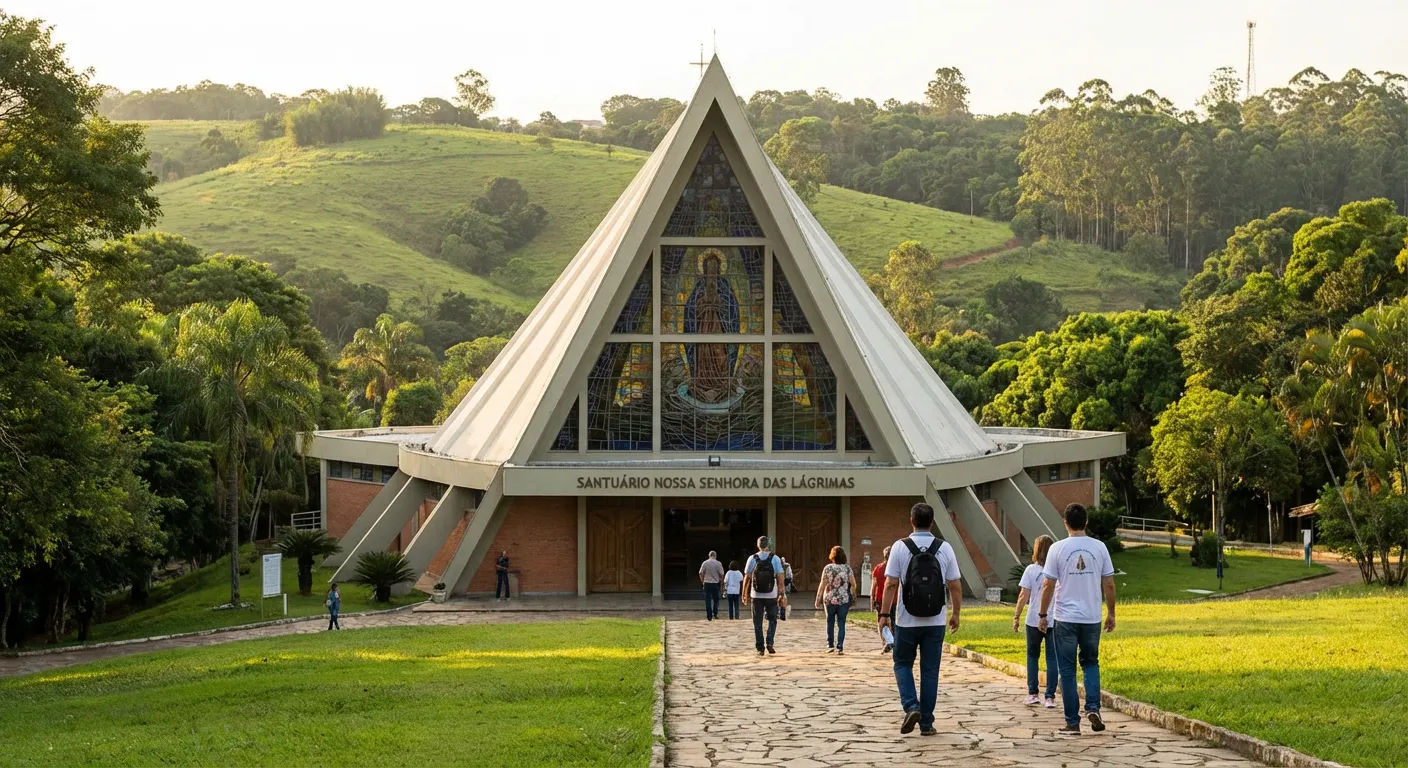
Our Lady of Tears (Campinas)
In 1930, the city of Campinas, Brazil, became the sacred site of a profound spiritual event known as the apparitions of Our Lady of Tears. While the devotion quickly embraced the entire local community, the visions were initially experienced by a humble nun named Sister Amalia of Jesus Flagellated. During the most notable apparition on March 8, 1930, the Blessed Virgin Mary appeared to her holding a radiant rosary with beads that shone like the sun and were as pure as ice. Mary revealed that these beads were formed from her very own sorrowful tears. Handing this "Crown of Tears" to the visionary, she presented it as a powerful instrument of grace and mercy for the faithful.
The message of Our Lady of Tears was one of profound compassion and divine intercession. Mary promised that whatever the faithful would ask of her Son through the merits of her tears, He would graciously grant. She urged the praying of this specific chaplet to bring about the conversion of sinners, the defeat of evil, and the deliverance of those in distress. As word of the apparitions spread, the local community experienced a massive wave of spiritual renewal. Numerous reports of miraculous healings, sudden conversions, and answered prayers began to surface, serving as tangible signs of the Virgin Mary's comforting presence and the miraculous power of her tears.
The lasting impact of these events on the faithful has been monumental, culminating in the devotion being officially Bishop-Approved. The local bishop at the time, Bishop Francisco de Campos Barreto of Campinas, thoroughly investigated the events, authorized the devotion, and actively promoted the praying of the Crown of Tears. Today, the legacy of the 1930 apparitions continues to resonate deeply within the local community and among pilgrims worldwide. The devotion to Our Lady of Tears remains a beacon of hope, reminding the faithful of a mother’s enduring love and the transformative grace born from her sorrow.
200000