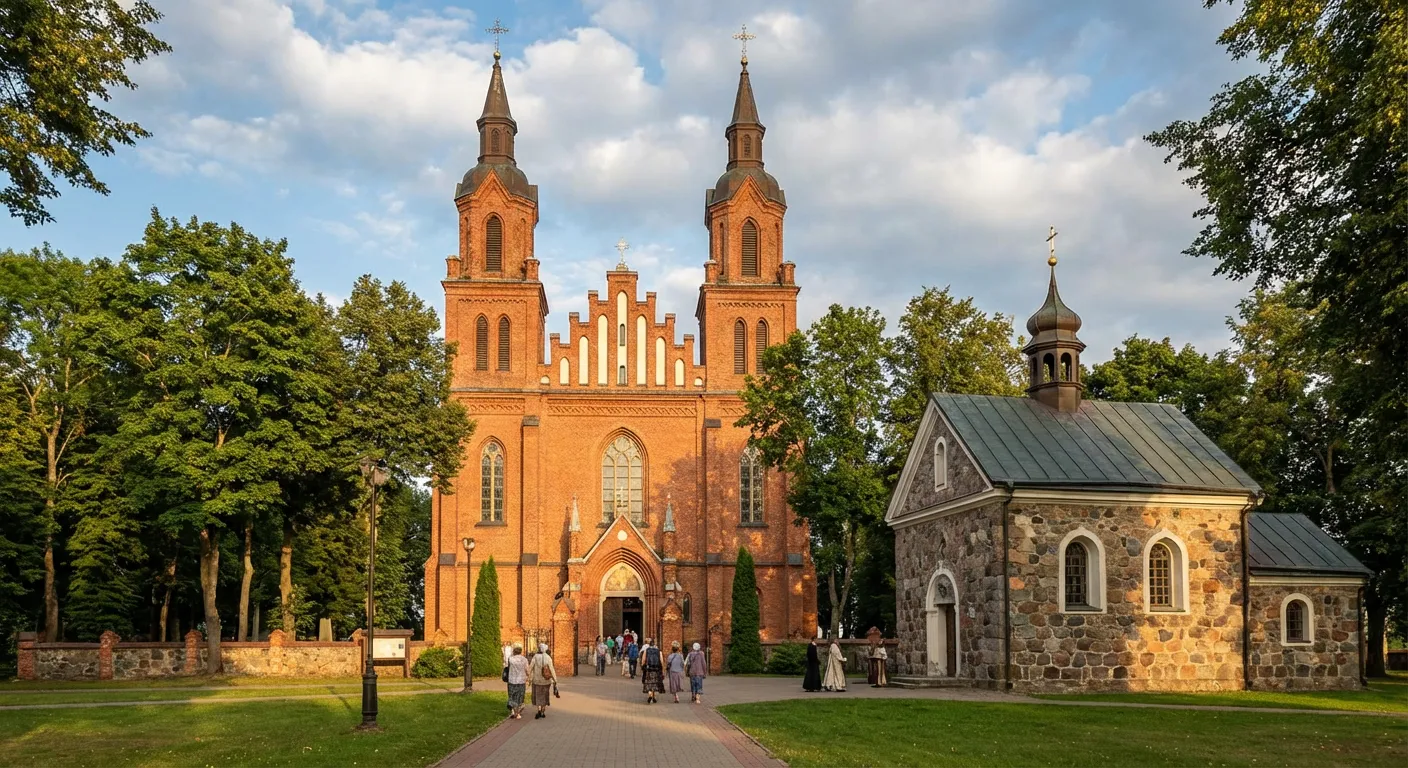
Our Lady of Siluva
Between 1608 and 1612, the small village of Šiluva, Lithuania, became the site of one of the earliest Vatican-approved Marian apparitions in European history. The extraordinary events began when four children, who were tending their flock of sheep in a nearby field, witnessed a striking and sorrowful sight. Standing upon a large rock was a beautiful, radiant woman holding an infant in her arms. She was weeping bitterly, her tears reflecting a deep and profound grief. The children were captivated by the grieving figure, who initially offered no words but conveyed a powerful sense of loss that deeply moved those who saw her.
Word of the weeping woman quickly spread, drawing the attention of the villagers, including a local Calvinist catechist. When a crowd gathered at the rock and asked the apparition why she was crying, the Virgin Mary finally spoke. She lamented, "There was a time when my beloved Son was worshipped by my people on this very spot. But now they have given this sacred soil over to the plowman and the tiller and to the animals for grazing." Following this poignant message, a remarkable miracle occurred. An elderly, blind man from the village was brought to the site, and upon arriving, his sight was miraculously restored. With his vision returned, he was able to point out the exact location where a buried iron box—hidden years earlier by a Catholic priest to protect it during the Reformation—was unearthed. The box contained the foundational documents and sacred vessels of the village's original Catholic church.
The apparitions of Our Lady of Siluva had a profound and lasting impact on the faithful, sparking a massive spiritual renewal and a return to the Catholic faith in a region that had largely converted to Calvinism. Today, the site remains a beacon of faith and resilience. A magnificent basilica and the Chapel of the Apparition were built over the very rock where the Virgin Mary stood, preserving it for veneration. As a fully Vatican-approved apparition, Šiluva draws thousands of pilgrims annually who come to honor the Blessed Mother, seeking solace, healing, and a connection to the sorrowful yet restorative message she delivered centuries ago.
150000