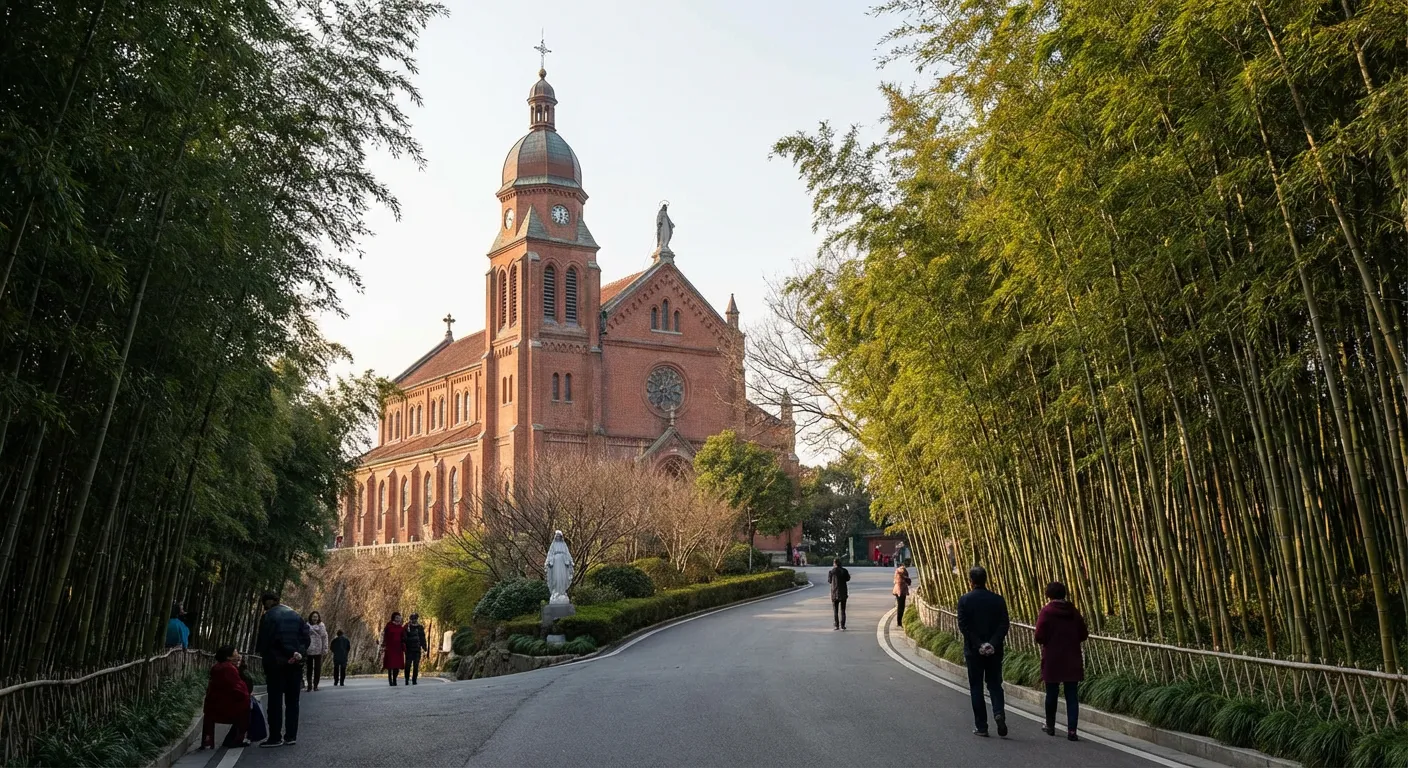
Our Lady of Sheshan
While Our Lady of Sheshan is one of the most significant Marian sites in Asia, it is unique in that it does not stem from a traditional apparition involving physical visions or spoken messages. Instead, the site is revered for a profound miraculous intercession. In 1863, Jesuit missionaries purchased Sheshan Hill in Shanghai, China. During this period, the region was under severe threat from the violent Taiping Rebellion, which endangered the lives of the local Christian community. In their desperation, the Jesuit superiors turned to the Virgin Mary, making a solemn vow: if she protected the diocese of Shanghai from destruction, they would build a magnificent church in her honor at the summit of the hill.
The "miracle" of Sheshan was the remarkable preservation of the Shanghai diocese, which was spared from the rebel forces despite the surrounding devastation. The Jesuits and the local faithful recognized this deliverance as a direct sign of Mary’s protective intercession. Fulfilling their promise, they began construction on the shrine. The site eventually grew into the grand Minor Basilica of Our Lady of Sheshan. Atop the basilica stands the iconic bronze statue of Our Lady, uniquely depicting Mary holding the Christ Child high above her head, presenting Him to the world with her arms outstretched.
The lasting impact of these events has been monumental for the faithful in the region. Our Lady of Sheshan has become the premier Catholic pilgrimage site in China, drawing thousands of devoted pilgrims each year, particularly during the Marian month of May. Even without a spoken message or a traditional visionary experience, the miraculous protection granted to the Jesuit missionaries in the 1860s established Sheshan as an enduring beacon of hope, resilience, and unity for Chinese Catholics.
200000