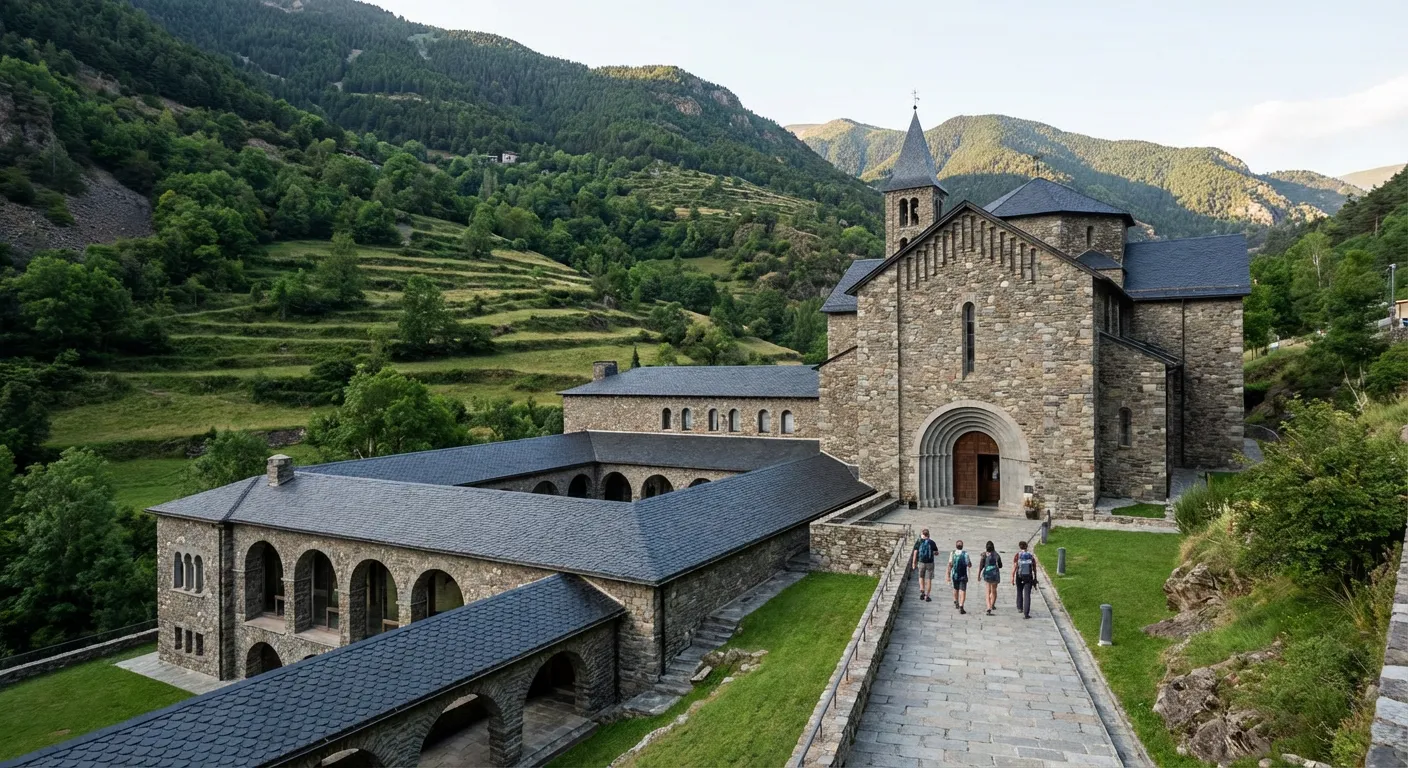
Our Lady of Meritxell
According to local 12th-century tradition, the miraculous events surrounding Our Lady of Meritxell began in the dead of winter on the feast of the Epiphany (January 6). Villagers from the Andorran parish of Canillo were traveling to a neighboring town for Mass when they witnessed an astonishing sight: a vibrant wild rose bush blooming miraculously in the deep, freezing snow. Drawn to this inexplicable sign of life in the harsh winter landscape, the villagers approached the bush and discovered a beautiful wooden statue of the Virgin Mary holding the Christ Child resting at its base.
Though the Virgin Mary did not appear to speak a verbal message, her will was made known through a series of profound miracles. The villagers reverently brought the statue to the church in Canillo to protect it from the elements. However, the very next morning, the statue had vanished from the locked church, only to be found back under the blooming rose bush in the snow. Believing it might belong elsewhere, the villagers then moved the statue to the church in Encamp. Once again, the statue miraculously disappeared and returned to the exact same spot in Meritxell. The faithful understood this miraculous relocation as a clear, unspoken message from the Blessed Mother: she desired to remain in that specific place to watch over the people of the valley.
In response to these miraculous signs, the villagers built a chapel on the very site where the rose bush had bloomed, establishing a permanent home for Our Lady of Meritxell. Over the centuries, this site has grown into the spiritual heart of Andorra. Today, recognized as a National Shrine, it draws countless pilgrims who come to honor the Virgin Mary. As the beloved patroness of the principality, Our Lady of Meritxell remains a profound symbol of faith, protection, and national identity for the Andorran people, leaving a lasting legacy of devotion that has endured for nearly a millennium.
100000