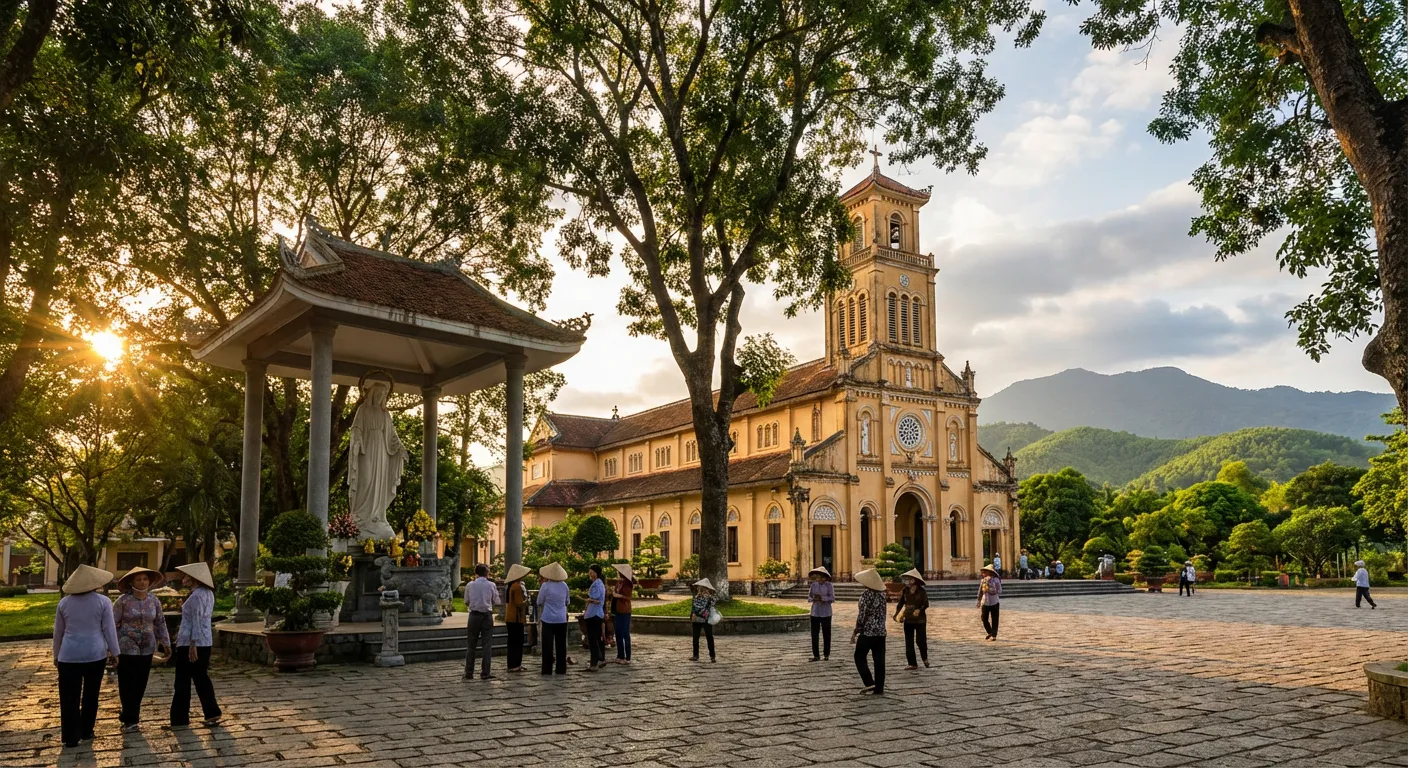
Our Lady of La Vang
In 1798, amidst fierce religious persecution in Vietnam, a group of Catholics fled to the remote, dangerous jungle of La Vang to escape the anti-Christian edicts of the emperor. Enduring hunger, severe sickness, and the constant threat of wild animals, the frightened refugees gathered each night at the foot of a large banyan tree to pray the Rosary. It was during one of these desperate vigils that they experienced a profound heavenly visitation. A beautiful lady appeared to them, dressed in a traditional Vietnamese áo dài and holding an infant in her arms, flanked by two angels. The faithful immediately recognized her as the Blessed Virgin Mary and the infant as the Christ Child.
The Virgin Mary spoke to the persecuted Christians with immense tenderness, offering them comfort and courage in their time of profound suffering. She instructed the refugees to gather the leaves from the surrounding wild trees and boil them to create a medicine that would cure their physical ailments. Furthermore, she made a lasting promise: anyone who came to that specific site to pray would have their petitions heard and answered. The miraculous healing of the sick through the boiled leaves served as an immediate, tangible sign of her maternal care and divine intervention.
The apparition of Our Lady of La Vang left an indelible mark on the faithful, transforming a site of fear and refuge into a beacon of hope. Despite continued waves of persecution and the destruction of several chapels over the centuries, devotion to Our Lady of La Vang only grew stronger. Today, the site in Vietnam is recognized as a Minor Basilica and serves as a major pilgrimage destination. Our Lady of La Vang remains a powerful symbol of resilience, faith, and maternal protection, drawing millions of pilgrims from around the world who seek her intercession and comfort.
1000000