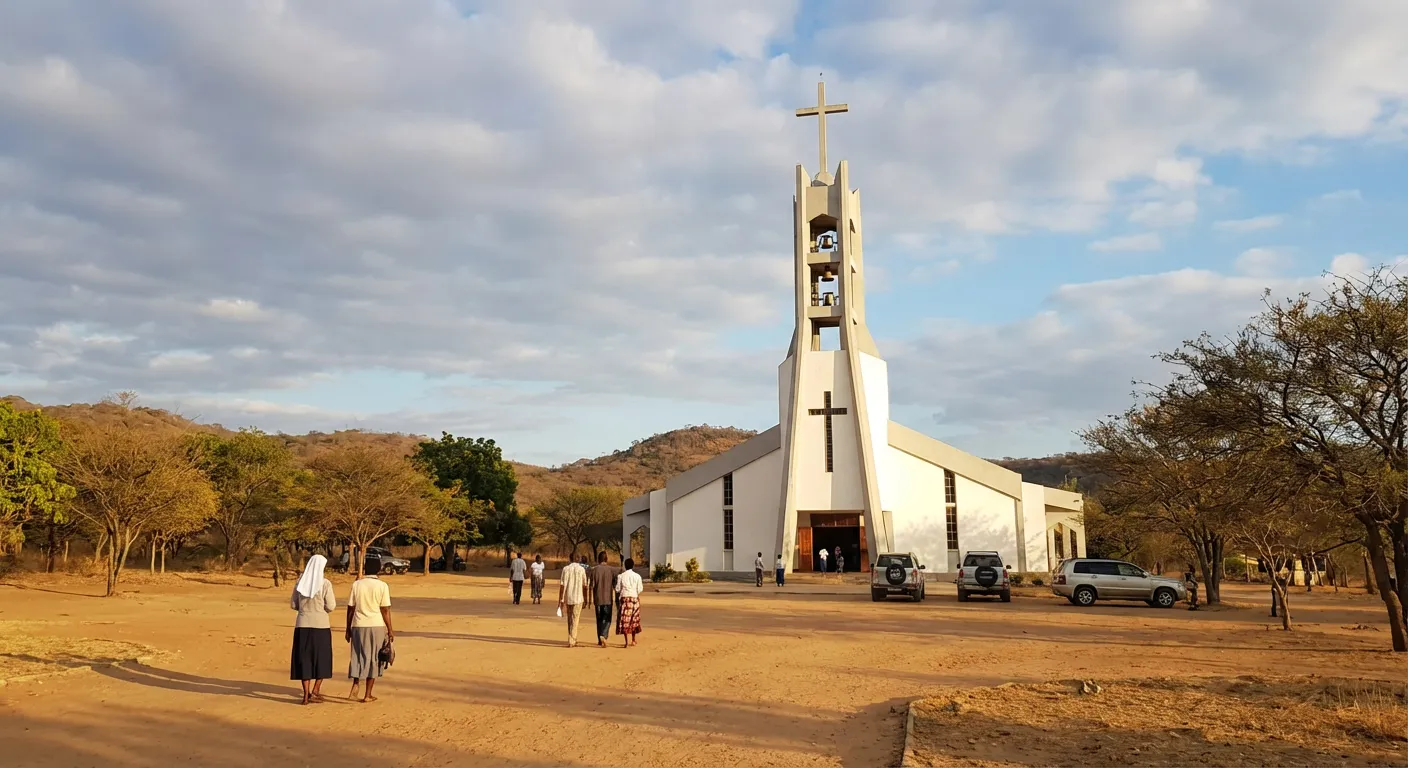
Our Lady of Fátima (Nampula)
To provide an accurate and factual account, it is important to clarify that no Marian apparition occurred in Nampula, Mozambique, in the 1950s. Rather, the site in Nampula is a Diocesan Shrine (specifically, the Cathedral of Nampula) established by Portuguese missionaries during the 1950s to honor the famous 1917 apparitions of Our Lady of Fátima that took place in Portugal. The devotion was brought to Mozambique by these missionaries, making the Nampula shrine a profound spiritual extension of the original events.
The apparition that this shrine venerates occurred in 1917 in the Cova da Iria near Fátima, Portugal. The Virgin Mary appeared to three young shepherd children—Lúcia dos Santos and her cousins Francisco and Jacinta Marto. The children described experiencing a vision of a woman "brighter than the sun, shedding rays of light clearer and stronger than a crystal goblet filled with the most sparkling water." During these monthly visitations, Mary spoke to the children with a message of urgent spiritual renewal, asking them to devote themselves to the Holy Trinity and to pray the Rosary daily to bring peace to the world and an end to World War I. She also entrusted them with the famous "Three Secrets of Fátima," which included a terrifying vision of hell, a request for the consecration of Russia to her Immaculate Heart, and a prophetic vision of the persecution of the Church.
The culmination of these apparitions was marked by a spectacular sign known as the "Miracle of the Sun" on October 13, 1917. A crowd of tens of thousands gathered in the pouring rain, and according to witnesses, the dark clouds suddenly broke, and the sun appeared as an opaque, spinning disc that cast multicolored lights across the landscape before seemingly plunging toward the earth. This miraculous event validated the children's visions and cemented Fátima as one of the most significant Marian apparitions in history. Decades later, the profound impact of these events inspired Portuguese missionaries to carry the message of Fátima across the globe. By establishing the Diocesan Shrine in Nampula in the 1950s, they created a lasting spiritual home for Mozambican Catholics, ensuring that Mary’s universal call for prayer, penance, and peace continues to resonate deeply with the faithful in the region today.
100000