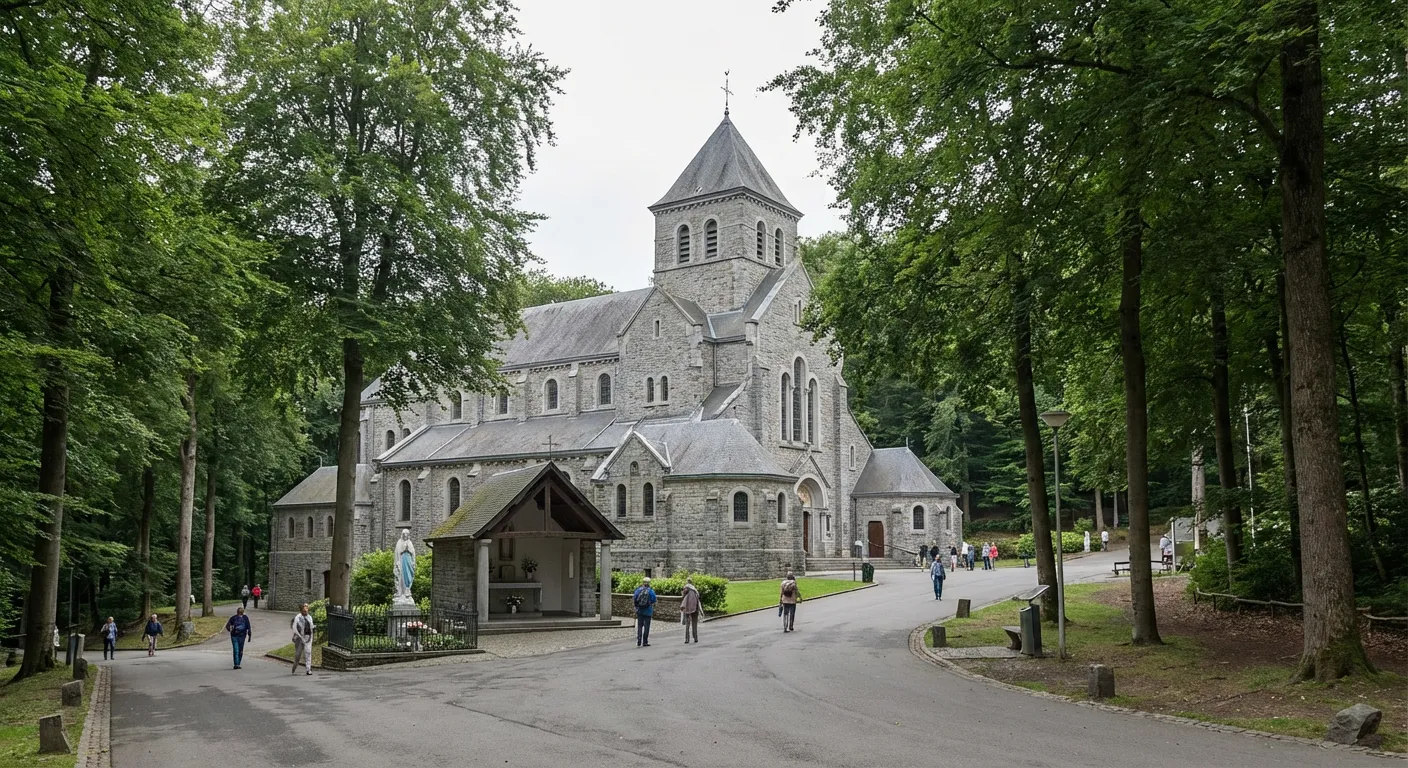
Our Lady of Banneux
In the winter of 1933, in the small village of Banneux, Belgium, an 11-year-old girl named Mariette Beco experienced a series of profound spiritual encounters. Over the course of eight apparitions between January and March, Mariette witnessed a radiant figure in her family's garden. The apparition, who identified herself as the "Virgin of the Poor" (Our Lady of Banneux), appeared dressed in a glowing white gown with a blue sash, holding a rosary. With a gentle and maternal demeanor, the Virgin Mary beckoned the young girl to follow her out into the cold, leading Mariette to a small, icy spring nearby.
During these encounters, the Virgin Mary delivered a message of deep comfort and universal compassion. She declared that the spring was "reserved for all nations" and specifically intended "to relieve the sick." Mary requested that a small chapel be built in her honor and urged Mariette to "pray much," leaving the young visionary with the reassuring promise: "Believe in me, I will believe in you." Following the apparitions, the spring at Banneux quickly became associated with numerous miraculous healings, drawing people from all over Europe who sought physical recovery and spiritual solace.
The events at Banneux left an enduring mark on the faithful, culminating in official Vatican approval of the apparitions in 1949. Today, the Sanctuary of Our Lady of Banneux stands as a major international pilgrimage site, drawing hundreds of thousands of visitors annually. It remains a powerful beacon of hope, particularly for the marginalized, the sick, and the suffering, who continue to travel to the quiet Belgian village to pray, drink from the healing spring, and find comfort in the enduring compassion of the Virgin of the Poor.
500000