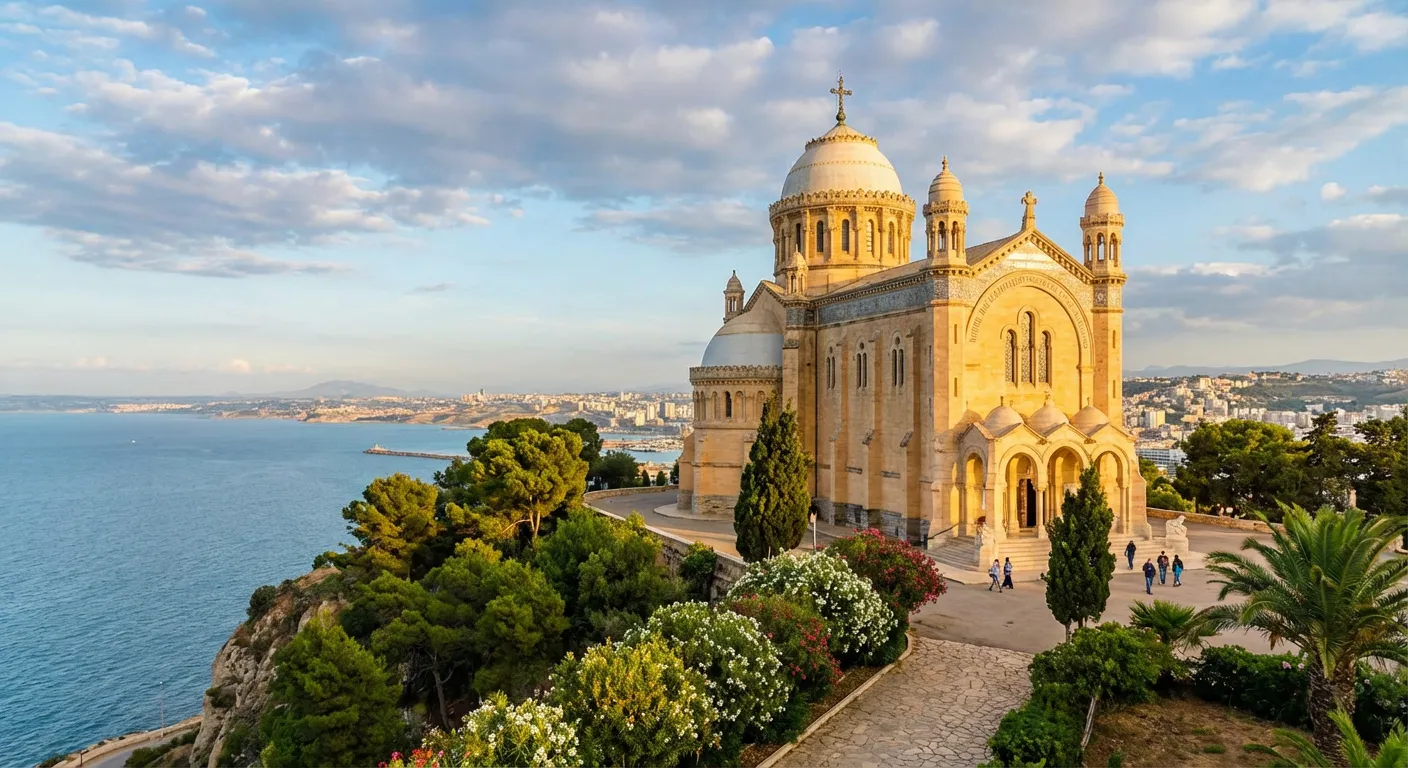
Our Lady of Africa
It is important to clarify that Our Lady of Africa (Notre-Dame d'Afrique) in Algiers is a highly revered Marian shrine and Minor Basilica, but it is not the site of a Marian apparition. Consequently, Cardinal Charles Lavigerie was not a visionary who saw or spoke to the Virgin Mary; rather, he was the prominent Archbishop of Algiers who oversaw the completion and consecration of the magnificent basilica in 1872. The site’s origins stem not from a supernatural vision, but from the deep devotion of the local faithful and the placement of a striking bronze statue of Mary overlooking the Bay of Algiers.
While there were no visionary experiences or spoken messages from the Virgin Mary, the shrine conveys a powerful, enduring message of its own: peace and interfaith harmony. The basilica is world-renowned for the inscription prominently displayed in its apse: "Notre Dame d'Afrique priez pour nous et pour les Musulmans" ("Our Lady of Africa, pray for us and for the Muslims"). This unique dedication has made the basilica a profound site of unity. It draws not only Catholic pilgrims but also local Muslims, who hold a deep respect for the Virgin Mary (known to them as "Lalla Maryam") and frequently visit the shrine to seek her intercession and maternal comfort.
Though it lacks the dramatic miracles of an apparition site, Our Lady of Africa has been the center of countless spiritual graces and answered prayers. The interior walls of the basilica are covered with ex-votos—votive plaques left by generations of the faithful expressing gratitude for healings, protection during wars, and safe passage for sailors navigating the Mediterranean Sea. Today, the Minor Basilica stands as a lasting symbol of hope, cultural brotherhood, and divine protection, continuing to leave a profound impact on the people of North Africa.
200000