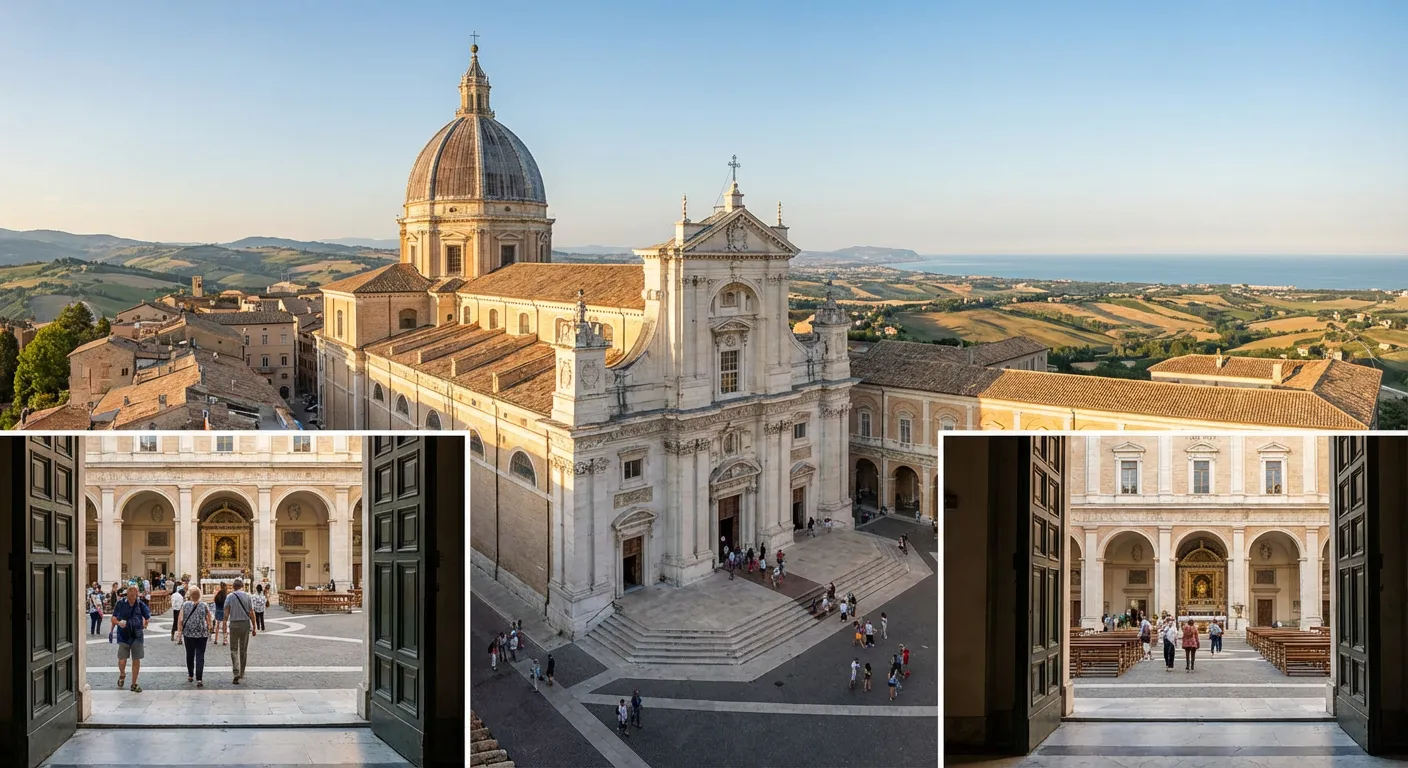
Holy House of Loreto
Unlike traditional Marian apparitions where the Virgin Mary appears to deliver a spoken message to a specific individual, the miracle of the Holy House of Loreto centers on a profound physical manifestation of divine intervention. According to pious tradition dating back to the 13th century, the very house in Nazareth where the Annunciation took place—and where the Holy Family lived—was miraculously transported by angels to save it from destruction during the fall of the Holy Land. Local shepherds and faithful reported the awe-inspiring sight of the small stone dwelling suspended in the night sky, bathed in celestial light and carried across the sea by angelic beings.
While the event relies on centuries of tradition rather than a single visionary, the Virgin Mary is said to have appeared in a dream to a local bishop, Alexander of Recanati, to confirm the miraculous nature of the structure. In this vision, she revealed that the humble walls were indeed those of her earthly home, the sacred space where the "Word became Flesh." After resting briefly in Dalmatia and a few other nearby locations, the Holy House finally settled in Loreto, Italy, in 1294. The sudden, inexplicable appearance of the house resting firmly on the ground without any foundational support stood as a miraculous sign in itself, immediately drawing the veneration of the local people.
The lasting impact of the Holy House of Loreto on the faithful has been monumental. Enshrined today within a magnificent Pontifical Basilica, the humble stone walls have drawn countless pilgrims, saints, and popes over the centuries who seek to pray in the exact space where the Incarnation began. The miracle of Loreto serves as a powerful, enduring testament to the reality of the Holy Family's earthly life, offering a profound spiritual connection to the Virgin Mary and continuing to be a site of deep peace, reported healings, and spiritual conversions.
4000000